by learnformula
search
For Business
Team license & compliance management
For Higher Education
Academic partnerships
For Government Agencies
Government training solutions
For Instructors & Course Creators
Teach on our marketplace
Become a Sponsor
Reach professionals where they learn
Log inStart 7-Day Free TrialStart Free TrialStart Free Trial
search
  1. Courses
  2. /Geotechnical
  3. /Geotechnical - General

Modern Approaches to Earthquake-Induced Liquefaction Assessment

Master cutting-edge geotechnical methods, advanced numerical modeling, and modern field tests to accurately evaluate seismic soil hazards and prevent ground failure.
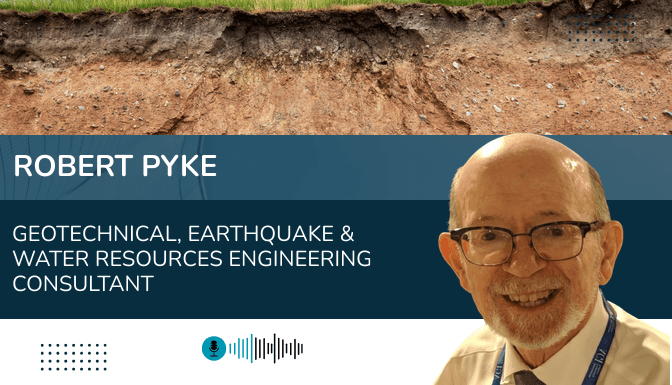
Created byRobert Pyke
BeginnerUpdated Oct 28, 2026
Modern Approaches to Earthquake-Induced Liquefaction Assessment

What You'll Learn

  • check_circleCompare simplified and advanced methods for assessing earthquake-induced liquefaction
  • check_circleIdentify when nonlinear effective-stress analyses are appropriate for project-specific evaluations
  • check_circleInterpret liquefaction assessment results using field, laboratory, and analytical data
  • check_circleApply practical strategies to evaluate liquefaction risk and support defensible engineering decisions

About This Course

Earthquake-induced liquefaction continues to present significant challenges for geotechnical engineers responsible for the design and assessment of buildings, transportation infrastructure, ports, dams, and other critical assets. While simplified assessment methods remain widely used, increasingly complex projects often require more advanced analytical techniques to accurately evaluate liquefaction potential, ground deformation, and seismic performance.

This practical course explores the evolution of liquefaction assessment from traditional screening procedures to modern nonlinear effective-stress analyses. Participants will examine the strengths and limitations of current assessment methods, the role of geological and site-specific investigations, constitutive modelling principles, and the practical application of advanced numerical analyses. Through real-world examples, the session provides guidance on selecting appropriate assessment methodologies, interpreting results, and delivering defensible engineering solutions for a range of infrastructure projects.

Key Topics Discussed:

  • Fundamentals of earthquake-induced liquefaction and geotechnical hazards
  • The Seed-Idriss simplified liquefaction assessment procedure
  • Limitations of simplified triggering, settlement, and lateral spreading methods
  • Geological and soil fabric considerations in liquefaction screening
  • Nonlinear effective-stress site response analysis
  • Constitutive modelling principles for liquefaction assessment
  • Field investigations and laboratory testing requirements
  • Validation and interpretation of analytical results
  • Selecting appropriate assessment methods based on project complexity and risk
  • Practical applications across buildings, bridges, ports, dams, tailings facilities, and transport infrastructure

Your Instructor

Robert Pyke

Geotechnical, Earthquake & Water Resources Engineering Consultant

menu_book1 courses

Robert Pyke, Ph.D., G.E., is an independent consultant specializing in geotechnical, earthquake, and water resources engineering. He earned his Ph.D. from the University of California, Berkeley, where he studied under the late Professor Harry Seed, widely regarded as the father of earthquake geotechnical engineering. His doctoral thesis was titled Settlement and Liquefaction of Sands Under Multi-Directional Loading. Dr. Pyke is a registered Civil Engineer and Geotechnical Engineer in the State of California.

Credit Information

What Students Are Saying

0.0 out of 5
Student's Choice
0 reviews

Frequently Asked Questions

We are a registered provider with 300+ associations and regulatory bodies worldwide. We operate across 27 global markets including Canada, the US, Australia, and the UK. Every course page clearly displays its specific accreditations. Upon completion, you receive a professional certificate that can be validated online. Our certificates include all necessary accreditation details, credit hours, and completion dates, and are formatted specifically to meet the submission requirements of most global regulatory bodies.

You May Also Like

  • Engineering: Structural Engineering

    Structural Forensic Engineering of Buildings

    starRated5.0out of 5,(23 reviews)
    7 CPD hrs
  • Engineering: Technology & Science

    Claude for Workflow Automation in Engineering

    starRated4.8out of 5,(29 reviews)
    1 CPD hr
  • Engineering: Working with Concrete

    Basics of Reinforced Concrete

    starRated5.0out of 5,(88 reviews)
    3 CPD hrs