
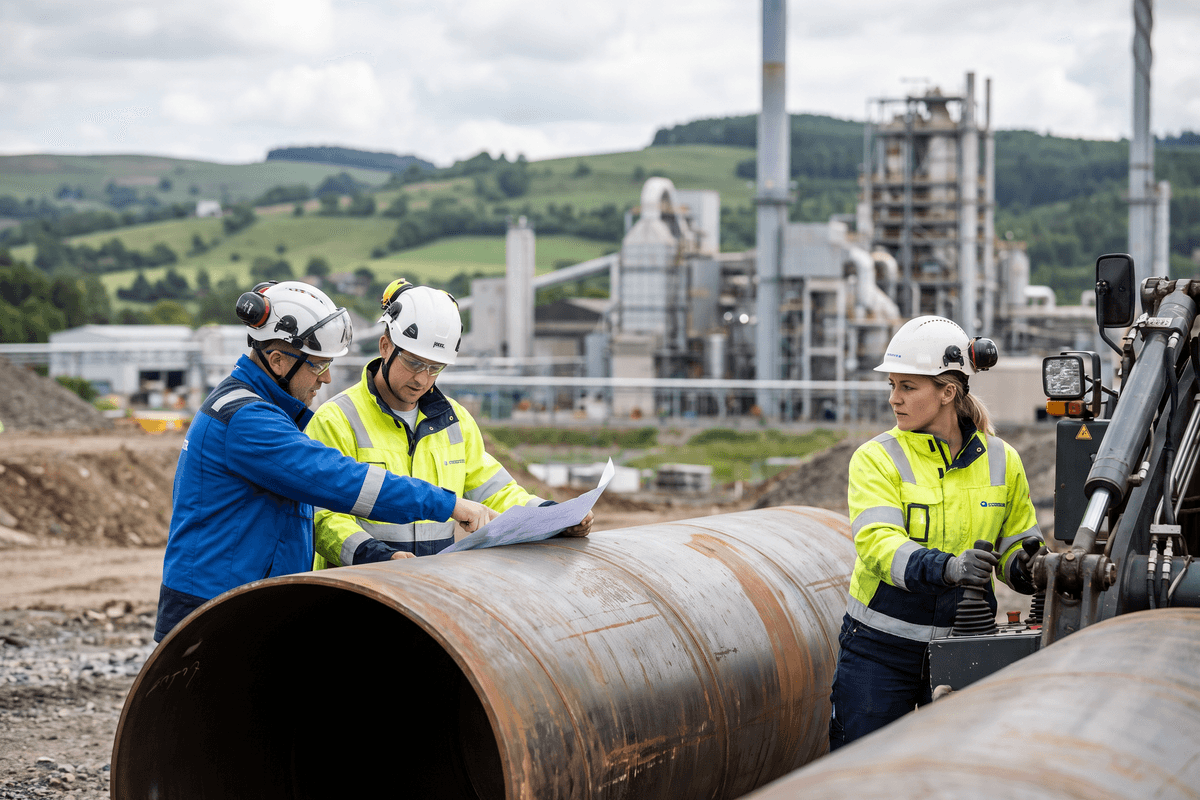

For decades, Taranaki has operated as New Zealand’s heavy industrial powerhouse. The region’s engineering and manufacturing firms cut their teeth on complex offshore energy assets, high-pressure processing facilities, and intricate petrochemical infrastructure. Today, as Aotearoa faces a multi-billion-dollar infrastructure deficit, that deep well of technical expertise is undergoing a strategic pivot. A newly announced $3 million grant from the Regional Infrastructure Fund (RIF) to support the Taranaki Alliance signals a concerted effort to anchor regional industrial muscle directly into the national and international infrastructure supply chain.
This regional capability injection arrives at a critical juncture for the wider engineering sector. With the Government concurrently committing to a $740 million state highway renewal programme through the National Land Transport Fund (NLTF), the civil and structural sectors are entering an intense delivery window. Yet, as engineering leaders well know, capital allocation alone does not guarantee successful outcomes. Unlocking real productivity requires addressing structural cost drivers, embracing standardised design, and systematically expanding the professional talent pool—challenges that require systemic reform from procurement down to site supervision.
The Taranaki Pivot: Repurposing Heavy Industrial Capacity
The transition facing Taranaki is not merely about preserving regional employment; it is about retaining high-spec engineering capabilities that are difficult to build from scratch. High-tolerance steel fabrication, heavy mechanical design, non-destructive testing (NDT), and complex asset integrity management are disciplines where Taranaki’s industrial ecosystem has traditionally led the country.
The Taranaki Alliance brings together local engineering, manufacturing, and technical consultancies to bid collaboratively on large-scale infrastructure, renewable energy projects, and offshore contracts. By aggregating balance sheets and specialised technical proficiencies, regional firms can compete against multinational conglomerates for major public and private works.
"Regional engineering clusters represent an indispensable reservoir of specialised capability. If New Zealand is to build resilient energy, water, and transport networks, we cannot afford to let heavy industrial skills atrophy during economic transitions."
For the broader engineering fraternity, this cluster model provides a blueprint for regional resilience. Rather than allowing specialist mechanical and industrial capability to fragment as legacy oil and gas fields mature, targeted co-investment helps redirect these skilled workforces toward grid-scale renewables, hydrogen trials, port infrastructure, and national water asset renewals.
The $740M Summer Sprint: High-Volume Civil Mobilisation
While specialist fabricators reposition for long-term programmes, the civil sector is gearing up for immediate operational execution. The Government’s announcement of a $740 million highway renewal package ahead of the summer construction season represents one of the largest seasonal maintenance campaigns in recent years.
Delivering on this scale during New Zealand's compressed warm-weather window presents significant logistical and engineering challenges:
- Bitumen and Aggregate Supply Chains: Coordinating raw material logistics across isolated regional corridors requires precise scheduling to prevent site stand-downs.
- Asset Diagnostics and Treatment Selection: Civil asset managers must balance deep structural rehabilitation against high-productivity chip sealing and asphalt overlays to maximise network coverage under tight budget envelopes.
- Plant and Operator Utilisation: With multiple regions competing for heavy earthmoving, milling, and paving plant, contractor coordination and alliance contracting models will be tested to their limits.
This seasonal push highlights a recurring structural dilemma in New Zealand infrastructure: the tension between reactive, seasonal maintenance sprints and long-term, programmed asset resilience.
Overcoming the Cost Premium: Standardisation and Multi-Year Pipelines
The rush to deliver major capital programmes frequently exposes the systemic inefficiencies embedded in New Zealand’s project delivery framework. In a recent analysis welcoming Te Waihanga’s infrastructure cost report, Engineering New Zealand highlighted that better planning, multi-year funding visibility, and standardised designs are urgent prerequisites to bringing New Zealand's infrastructure costs in line with international benchmarks.
New Zealand engineers often face an excessive degree of bespoke design requirements for relatively routine civil assets, such as small-span bridges, culverts, retaining structures, and pump stations. Each territorial authority frequently enforces idiosyncratic variations, driving up design hours, consenting timelines, and supply chain costs.
| Delivery Element | Current Bespoke Approach | Standardised National Model |
|---|---|---|
| Design & Documentation | Custom design per council; high engineering overhead per linear metre. | Modular, pre-approved standard details; reduced design time and faster consenting. |
| Procurement & Supply | One-off material orders; fragmented batch manufacturing. | Aggregated component manufacturing; bulk procurement discounts and steady yard throughput. |
| Funding Horizon | Annualised or volatile 3-year political funding cycles (boom-and-bust). | Ring-fenced, 10-to-30-year infrastructure pipelines with legislative commitment. |
| Workforce Planning | Hiring and lay-off cycles linked to election and budget swings. | Continuous workforce development, stable apprenticeships, and predictable career pathways. |
Standardisation does not mean sidelining site-specific engineering judgement—particularly in Aotearoa’s complex geotechnical and seismic conditions. Rather, it allows consulting engineers to focus their high-value analytical effort on ground risk, seismic resilience, and environmental mitigation, rather than reinventing standard structural details from scratch.
The Human Equation: Integrating International Engineering Talent
Even with industrial clusters like the Taranaki Alliance and streamlined design frameworks, physical delivery ultimately hinges on human capital. The engineering sector continues to navigate acute skill deficits across intermediate, senior, and Chartered Professional Engineer (CPEng) levels.
While domestic graduate pipelines are critical for long-term sustainability, immediate pipeline demands cannot be met without effectively integrating internationally qualified professionals. Highlighting this imperative, Engineering New Zealand has put the spotlight on the Special Interest Group for Immigrant Engineers (SIGIE), a network dedicated to breaking down the barriers that prevent immigrant engineers from contributing at their full potential.
Overcoming Systemic Barriers in Practice
Many immigrant engineers arrive with extensive experience on multi-billion-dollar global infrastructure projects, yet find themselves bottlenecked by structural hurdles in the local market:
- The "Local Experience" Catch-22: Employers often default to requiring New Zealand experience before considering candidates, overlooking transferable technical competence in hydraulics, structural mechanics, and project management.
- Standards Familiarity: Navigating NZS codes (such as NZS 3910, NZS 1170.5 seismic design, and NZS 4404) requires targeted bridging education rather than total career re-qualification.
- Chartership Pathways: Supporting internationally trained engineers to achieve CPEng status under the Washington Accord or through competency-based assessment accelerates their progression into technical lead and signing-off roles.
By offering targeted mentoring, regulatory masterclasses, and networking opportunities, initiatives like SIGIE provide a structured pathway to turn latent human capability into active site and design-office leadership.
A Cohesive Strategy for Aotearoa’s Infrastructure Future
The convergence of regional manufacturing support in Taranaki, immediate highway renewal investment, procurement reform advocacy by Te Waihanga, and workforce integration initiatives represents the multi-faceted approach New Zealand desperately needs. Engineering excellence cannot exist in isolation from industrial strategy, standardisation, or human resource development.
For engineering executives, consultants, and public sector asset managers, the message is clear: building a high-performing infrastructure sector requires looking across traditional boundaries. We must harness regional industrial clusters to deliver national projects, demand standardisation to drive down costs, and actively integrate global talent into our local teams. Only through this holistic alignment can Aotearoa deliver the resilient, cost-effective infrastructure that its communities and economy require.